

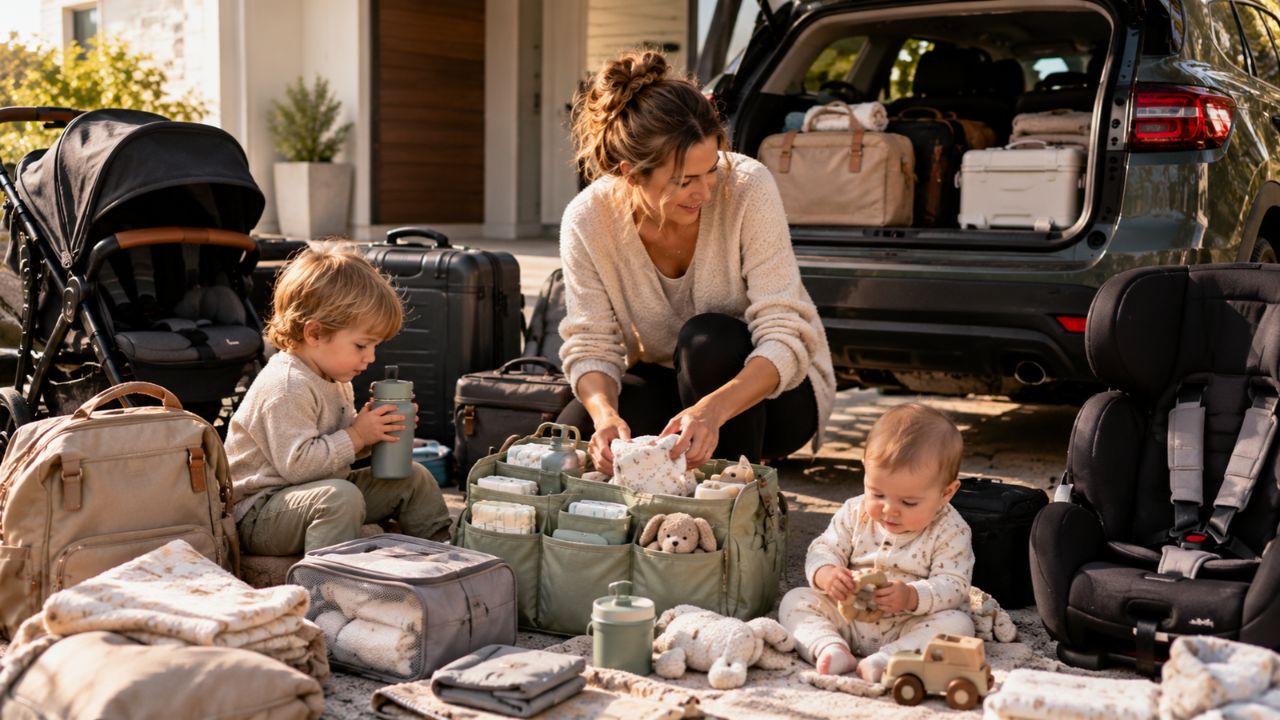
The easiest first road trip with a baby and toddler is one with a short driving day, flexible stops and a small bag you can reach when you park. Start with care needs, then add entertainment. A well-packed trunk cannot make an overambitious itinerary feel short.
This guide is for families traveling by car with an infant and an older child roughly ages one to three. It focuses on planning your first outing rather than choosing a car seat or recommending a medical travel schedule.
Disclosure: As an Amazon Associate I earn from qualifying purchases. I may receive a commission when you buy through the paid links in this article, at no extra cost to you.
Choose a first trip you can shorten
Pick a destination where arriving late will not spoil the day. A flexible visit to relatives is easier to adjust than a timed attraction with a nonrefundable ticket. Identify somewhere you could stop early, turn around or stay overnight if necessary.
Look at actual driving time rather than the distance alone. Add room for loading, diaper changes, feeds and a toddler who needs to move. A map estimate is the time the vehicle is traveling; it is not your family’s door-to-door schedule.
Choose a departure that suits both your child’s routine and an alert driver. A possible nap is a useful bonus, but do not build the entire plan around sleep happening on command.
Separate the stop bag from the overnight luggage
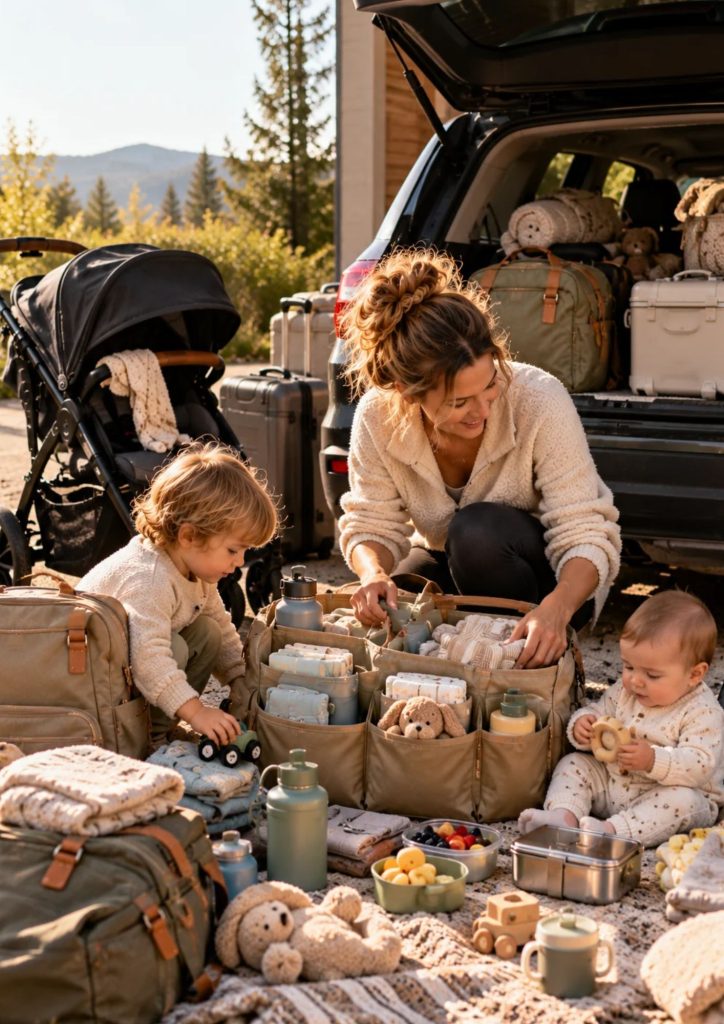
The stop bag should solve one feed, one change and one clothing accident without opening your suitcase. Pack diapers, wipes, a changing surface, feeding supplies for your usual routine and a complete spare outfit for each child.
For a compact changing setup, compare the Skip Hop Pronto portable changing station (paid link). Check that it holds the supplies you actually use. A wipeable mat you already own may do the same job without another purchase.
Keep used clothing separate in a zippered wet and dry bag (paid link). Choose an easy-clean bag and test its closure; do not assume every fabric pouch will contain liquid spills.
For the overnight case, packing cubes for baby clothes (paid link) can separate each child’s outfits. Ordinary labeled bags are a reasonable alternative. The useful feature is being able to find a complete outfit quickly.
A few washable baby washcloths (paid link) can cover small cleanup jobs. Keep a clean set separate from used cloths so the same cloth does not end up doing every task.
Plan the stops before the entertainment
The American Academy of Pediatrics advises planning breaks during infant car travel and using an appropriately installed rear-facing seat. Read its infant car-travel guidance alongside your seat manual. Ask your pediatrician about travel with a premature infant or a baby with specific health needs.
Mark more than one suitable stopping place. Look for a place where you can park safely, use a restroom and tend to both children without rushing. Stop sooner when a child needs care; the planned stopping point is not a target to push through distress.
Feed and change the baby while safely parked. For your toddler, make food a seated, supervised stop activity rather than something the driver needs to monitor from the front seat.
A sample day for a three hour drive
This is a planning example, not a prescribed interval for any baby.
- Before departure: check the seat setup, feed and change as needed, and load the stop bag last.
- First driving section: allow quiet looking-out time, familiar songs or rest. The driver concentrates on driving.
- First useful stopping point: park, attend to feeding and changes, and let the toddler move in a suitable space with an adult.
- Next driving section: continue only if the children and driver are comfortable. Keep another stop available.
- Arrival: unpack the stop bag and sleep essentials first. Leave sightseeing until everyone has settled.
If one adult is traveling alone, simplify further. Prepare the route and audio before departure and pull over safely whenever you need to help a child. Reaching backward or retrieving a dropped toy while moving is not part of the plan.
Give your toddler a small role
Ask your toddler to choose one familiar soft toy before leaving, help count the bags or name the next song while a passenger handles playback. Having a role does not mean being responsible for a younger sibling.
Keep activity expectations modest. You do not need a new toy for every stretch of road. Quiet observation and familiar conversation count, too.
Questions parents ask
Should we buy travel versions of everything
No. Start with your normal diaper bag and feeding equipment. Add an item only when it solves a specific packing or cleanup problem.
What if the baby does not sleep
Treat sleep as optional when planning the itinerary. Keep room for extra stops and reduce the day’s other commitments.
Where should we start with packing
Use the baby and toddler road trip packing checklist to divide supplies by when you need them.
A successful first trip gives you information for the next one: what you used, what stayed packed and how much driving your family enjoyed. Write those three things down before buying more gear.