

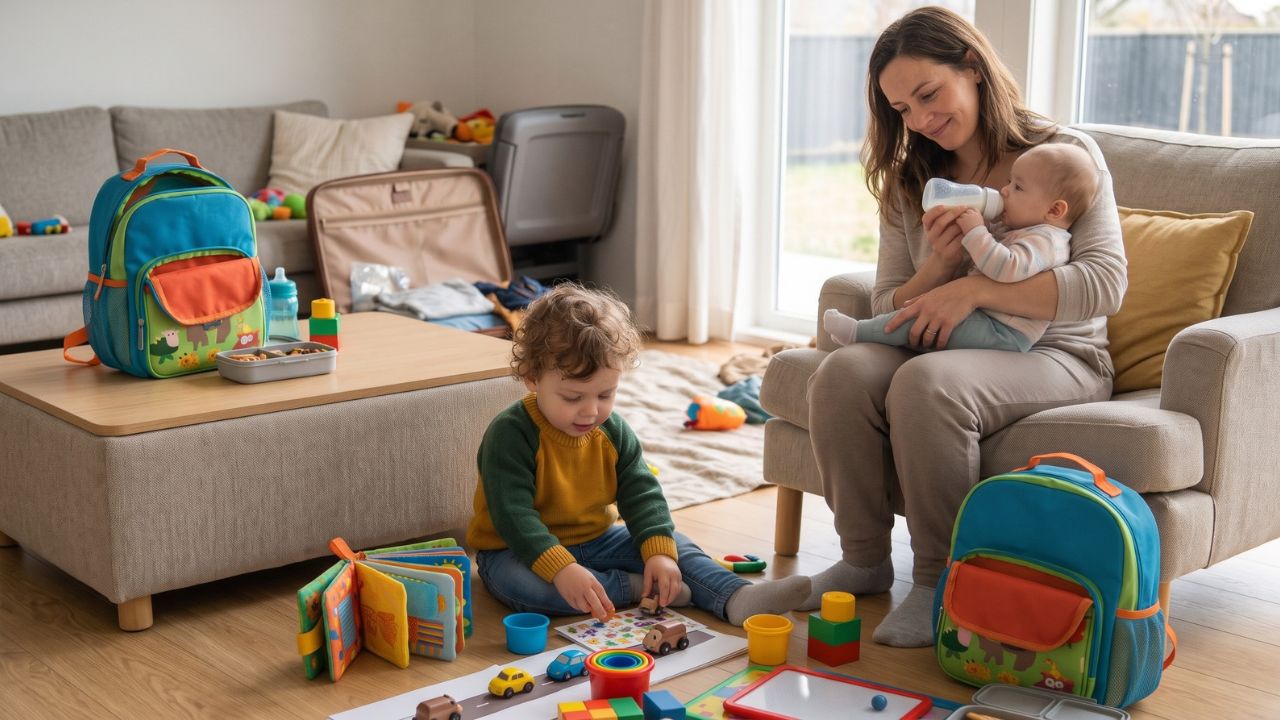
The most useful toddler activities while feeding a baby are familiar, easy to start and close enough for you to supervise. Set up one activity before the feed begins, then keep a simpler backup nearby. The goal is a manageable shared moment, not a promise that your toddler will play alone for an entire feed.
This guide is for parents caring for a baby and a toddler roughly ages one to three. Choose each activity according to your toddler’s behavior, the product label and how much help you can safely give while feeding.
Disclosure: As an Amazon Associate I earn from qualifying purchases. I may receive a commission when you buy through the paid links in this article, at no extra cost to you.
Set up the space before the baby is hungry
Choose a feeding spot with a clear view of a nearby childproof play area. Move cords, hot drinks, small objects and adult supplies out of reach. Keep the toddler’s activity separate from bottles, pump parts and the baby’s immediate space.
Set out one activity where your toddler can reach it safely. A low tray or the floor may suit your room better than a high surface that encourages climbing.
If your toddler needs hands-on supervision for an activity, save it for another time. Being able to see a child does not make every craft or toy appropriate while your hands are occupied.
Start with a familiar book
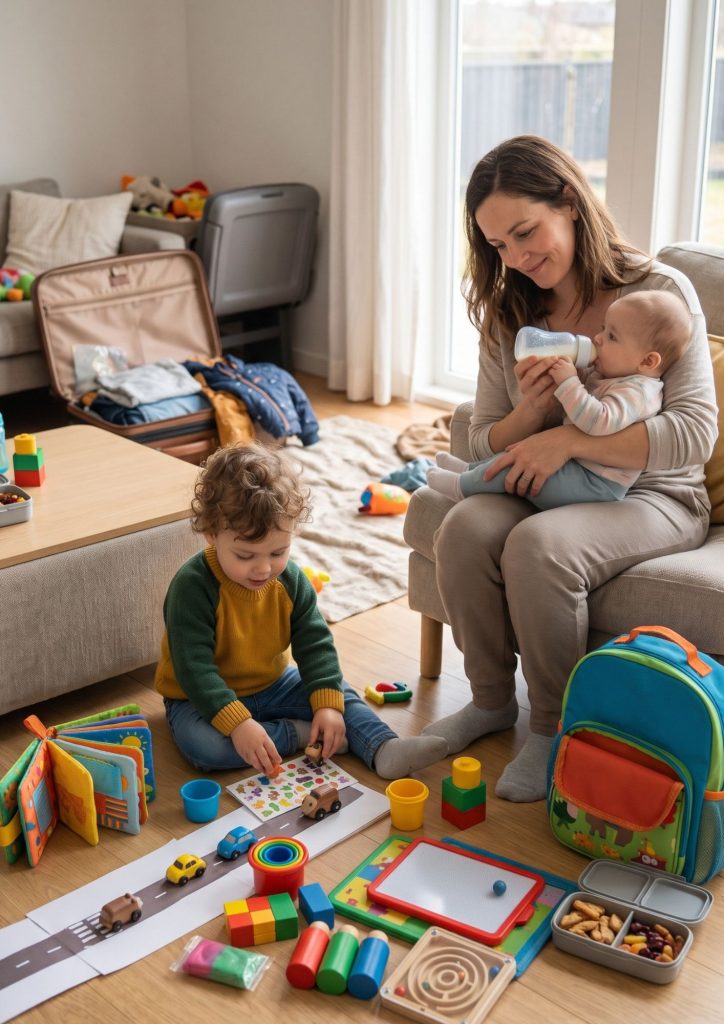
A Manhattan Toy Mini Apple Farm soft book (paid link) is one option for shared looking and naming. A familiar cloth book already in your home is just as useful. Ask your toddler to find a picture or show the book to a stuffed animal.
Use the same simple invitation each time: “Choose a page and tell me what you see.” If conversation feels like too much while feeding, your toddler can sit nearby and turn pages without performing a task.
A toddler board book (paid link) is another option if your child handles rigid books appropriately. Borrowing a small rotation from the library keeps the basket interesting without creating a shopping routine.
Offer large pieces for familiar play
Baby stacking cups (paid link) can support a simple floor invitation: stack two, nest them or put a large familiar toy beside them. Check the exact set’s age guidance before use.
Keep the play near the floor and away from the baby’s head. If throwing has become the game, put the hard pieces away and return to a softer activity. You do not have to finish a setup just because you prepared it.
Large toddler building blocks (paid link) may suit a child who already plays with them. Choose the exact size and age range carefully; a preschool construction set with small components is a different product. Start with a few blocks so cleanup stays manageable.
Add activities that cost nothing
A toddler can look for familiar objects you name in the room, sing a favorite song with you or copy a facial expression. None needs a worksheet or a new kit.
Try giving your toddler a small role before the feed: choosing the book, placing your clean cloth beside you or picking a song. Keep the task optional and avoid making your child responsible for the baby’s care.
If your toddler wants closeness, move the book activity nearer when that is comfortable and safe. An activity basket should not become a rule that they must stay away whenever the baby feeds.
Match the setup to the child you have today
For a child who mouths everything, avoid paper scraps, detachable pieces and craft supplies that need continuous hands-on help. Choose intact toys intended for that child’s age and stage. Follow CPSC guidance on toy age labels and small parts.
For a child who empties every container, reduce the number of pieces. A basket with four familiar items is easier to reset than a bin full of loose supplies.
For a child who finds feeding time upsetting, start with connection before offering a toy. Explain what is happening in a short, consistent way. If they need care you cannot provide while continuing the feed, make the baby safe and respond to the toddler.
Make the next feed easier
Afterward, reset only what you used. Put the book back, collect the cups and remove damaged items. If the same activity was rejected several times, swap it for something familiar that your child currently enjoys.
Keep a short note for yourself: easy to start, too much help needed, or worth trying again. This gives you a useful rotation based on your own child rather than a list of supposedly essential toys.
Questions parents ask
How long should my toddler play independently
There is no guaranteed duration. Begin with brief shared play and expect interruptions. This setup supports supervision; it does not replace it.
Can I use snacks to occupy my toddler during feeds
Only when you can provide the supervision and seating the meal needs. If feeding the baby makes that difficult, choose a nonfood activity and plan the toddler’s meal separately.
Where can I find more screen-free ideas
Build a quiet-time basket using the same familiar items. For ideas to save for later, browse Offline Family Guide on Pinterest, choosing activities that suit your child’s age and supervision needs.