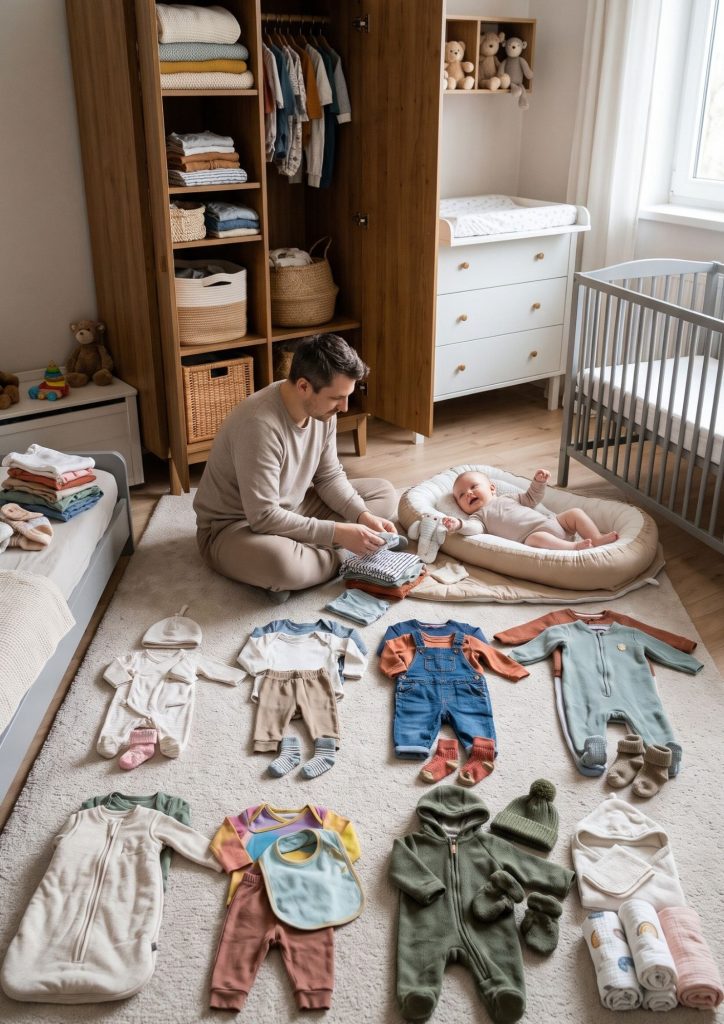
A useful baby wardrobe starts with easy-change bodysuits, everyday one-piece outfits and a few separate layers. Buy a small rotation in the size you expect to need, then adjust for your baby’s fit, the season and how often you do laundry. The age label is a shopping guide, not a reliable measurement of your baby.
You do not need matching outfits for every day of the week. You need enough clean clothes to cover normal changes without turning every load of laundry into an emergency. For the other care categories, start with our newborn must-haves guide.
*This article contains affiliate links. Purchases through marked links may earn me a commission at no extra cost to you.
A flexible starting quantity
For a family washing every two or three days, a starting estimate is five to seven bodysuits and four to six everyday one-piece outfits in the size currently being worn. Add two or three pairs of pants if you use separate outfits. These are planning estimates, not minimum requirements.
If you mostly use one-piece outfits, you may need fewer separate bodysuits and pants. Frequent spit-up or leaks may increase the spare set you need. Access to a washer, drying time and hand-me-downs all change the calculation.
Keep a few items in the next likely size, but leave most extra packs unopened until you know what fits.
Four clothing basics to compare
Cotton bodysuits for a simple base
Gerber cotton bodysuits are an option for a basic rotation. Compare the sleeve length, neckline, diaper snaps and fabric on the exact pack. A plain multipack can be easier to combine with existing clothes than a coordinated outfit that needs every piece together.
Check the height and weight chart before ordering. Choose enough for your actual use rather than assuming you need a bodysuit underneath every outfit in every temperature. Gerber cotton bodysuits on Amazon*
Socks when the outfit leaves feet uncovered
A small pack of baby socks can complete an outfit made from separates. Families using mostly footed one-piece outfits may need fewer pairs. Choose enough to cover your normal laundry interval without filling a drawer before you know what stays on comfortably.
Check that the elastic is not tight and that the toes have room. Reassess fit as the baby grows, and do not assume that an age label guarantees the right size. Baby socks for outings on Amazon*
Easy-change Sleep and Play outfits
Simple Joys by Carter’s Sleep and Play outfits are worth comparing if you want fewer separate pieces during changes. Check whether the exact pack has the closure you prefer; similar-looking versions can have different zippers or snaps.
Look for comfortable movement through the torso and legs. If you choose a footed version, check that the feet do not pull on the toes. Size up when the current garment becomes restrictive, rather than continuing to use it because the age label still seems correct. Simple Joys by Carter’s Sleep and Play on Amazon*
Pants for the days you use separates
Gerber baby pants are an option when you want to combine existing bodysuits with a removable daytime layer. Look for an easy waistband and a shape that leaves room for the diaper.
Separate pants are useful only if you actually dress your baby in them. A family using mostly one-piece outfits may need very few. Check the fabric and waistband after washing, and avoid decorative pieces that can detach. Gerber baby pants on Amazon*
What changes as sizes change
Newborn and 0 to 3 months
Have a small number of newborn-size items available if appropriate, but avoid stocking an entire drawer before you know the baby’s size. Keep the next likely size accessible so a sudden change does not become an urgent shopping trip.
Easy openings matter during frequent changes. Wash a manageable first set according to the care instructions and keep returnable extras packaged.
3 to 6 months
Recheck torso length, diaper space and movement rather than simply replacing every item with the next label. Different brands can fit differently at the same stated age. Keep a complete spare outfit in the diaper bag.
6 to 12 months
More floor play and meals can change where clothes get dirty. Choose fabrics and closures that fit your routine, and reassess knees, cuffs and toes as the baby moves. Daytime clothes do not have to double as sleepwear.
Keep sleepwear and outdoor layers separate
Choose sleep clothing according to its label, fit and room conditions. Do not add loose blankets or weighted sleep products to compensate for a clothing choice. The AAP safe-sleep guidance covers sleep clothing and overheating.
For car journeys, bulky outerwear does not belong beneath the harness. Follow the AAP winter car-seat guidance and the car-seat instructions when adding warmth.
If relatives want to help, share sizes and quantities in advance. The baby registry guide can help spread purchases across useful categories. Our first-time mom essentials also includes the parent’s needs, so preparation does not stop at the baby’s wardrobe.
Frequently asked questions
Is 0 to 3 months the same as newborn
Do not assume so. Labels and measurements vary by brand. Compare the exact size chart with the baby’s height and weight.
How many baby outfits should I buy
Start with enough for your laundry interval plus spare changes. Count the items you actually use and add more only if you repeatedly run short.
Should I buy everything a size larger
No. Excessively loose clothes can fit poorly, especially for sleep. Choose the correct current fit and keep a small next-size supply ready.
*This article contains affiliate links. As an Amazon Associate I earn from qualifying purchases. If you buy through a marked link, I may receive a commission at no extra cost to you. Your purchase helps support BabyStuff Blog. Thank you!