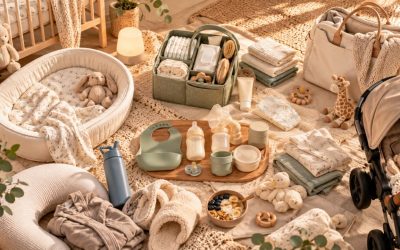

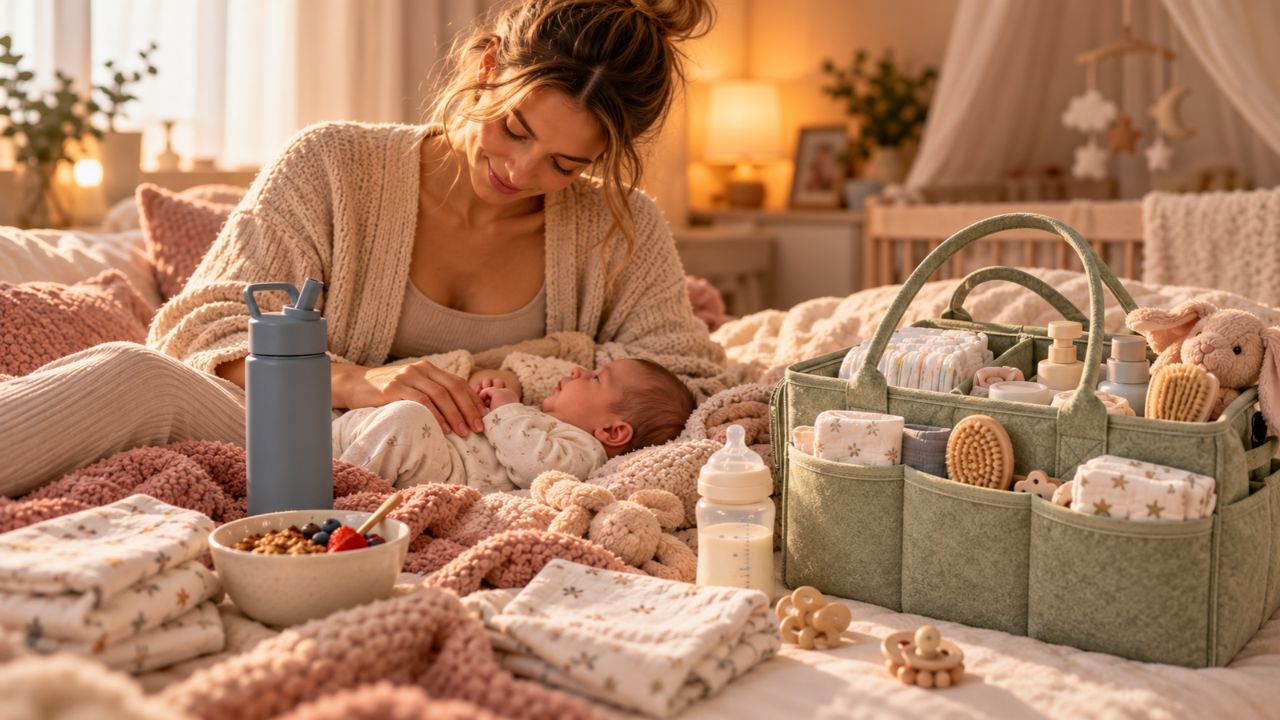
A first baby changes the rhythm of an entire household. The useful essentials are not the products that promise a perfect routine; they are the small supports that remove friction when sleep is broken, feeding takes longer than expected and leaving the house feels like a logistics exercise. This guide speaks to the mother as a person, not only as the person buying equipment for the baby.
Also check: Newborn must haves.
Separate care for the baby, care for the mother and systems that make the home run. That prevents the common mistake of calling a decorative gift an essential while leaving out water, food, comfortable clothing, charging access and a place to put things down with one hand.
- Start with the real household need.
- Separate time-critical purchases from later preferences.
- Make safety and returns part of the buying decision.
- Keep affiliate products secondary to the explanation.

What belongs on the shortlist
Start by sorting the decision into a few product categories. Every category earns its place only when it solves a real task, has a realistic use case and comes with a clear boundary. You should be able to remove an item from the list without feeling that you are failing as a parent.
When you turn this draft into product cards, put the use case, safety/return note and fit boundary before the affiliate link. That order keeps the guide useful even when a retailer changes stock or a reader chooses another brand.
| Category | What to look for | Why it matters |
|---|---|---|
| Recovery corner | Water, snacks, comfortable layers and reachable storage | Small supports matter when movement is limited |
| Feeding station | Nursing/pumping or bottle supplies as relevant | Keep it flexible and non-judgmental |
| Night setup | Dim light, phone charger and safe baby sleep area | Reduces repeated trips without changing safe sleep |
| Diaper flow | Supplies on the main floor and a portable caddy | The room is not always the place where the baby is |
| Leaving home | One simple bag and a tested car-seat/stroller setup | Practice prevents panic at the door |
| Help system | Meal support, contact list and task-sharing | Not everything useful needs to be bought |
How to compare products without getting lost
A trustworthy roundup explains tradeoffs instead of rewarding the longest feature list. Weight, size, cleaning, compatibility, subscription, return policy and support often matter more than one extra function. Use the comparison below to decide what deserves a product card, then verify each live model against the current manufacturer and retailer page.
There is no product that is best for every family. Match the recommendation to a situation and name the limit. A parent can then choose, compare or wait without being pushed into a purchase that does not fit the household.
| Decision point | Question | Editorial rule |
|---|---|---|
| Need | Useful product criteria | Human support that may work better |
| Long feeding sessions | Easy cleaning, stable support, one-handed access | A meal, water refill or company |
| Interrupted sleep | Simple lighting and reachable essentials | A shift plan and realistic expectations |
| Leaving home | Lightweight, accessible storage and fit | A practiced packing routine |
| Mental load | Visible checklists and shared reminders | A partner/friend owning a task |
What belongs in a supportive, non-medical guide
Postpartum recovery and feeding can involve medical questions. Keep the article practical without diagnosing, prescribing or promising recovery outcomes. Encourage readers to follow their clinician or midwife for pain, bleeding, feeding difficulty or mental-health concerns. Product links should support comfort and organization, not replace care.
Keep general information separate from medical advice. Link to current official guidance for sleep, safety or connected devices and date-stamp the review. If a product has a recall, missing instruction or unclear age limit, remove it from the recommendation until the issue is resolved.
- Gifts that imply the mother needs to lose weight, recover faster or perform motherhood correctly.
- Products that create more cleaning, charging or tracking than they remove.
- Feeding products presented as universal when families use different methods.
- Unqualified medical, lactation or mental-health claims.
Test the decision in a normal day
Before checkout, run the product through the moment it is supposed to improve. Where will it live? Who will use it when tired or in a hurry? Can it be cleaned, adjusted, returned or stored? What happens when the baby grows, the season changes or the family’s routine differs from the product description? These questions expose weak recommendations quickly.
For gift pages, apply the same test from the recipient’s perspective: is the size known, is the item wanted, can it be exchanged and does it create more work? For gear pages, add a short hands-on test and an explicit stop condition. This turns a product list into advice a parent can act on.
| Real-life moment | Question to answer | Useful result |
|---|---|---|
| First use | What must work immediately? | Small starter set |
| Cleaning | What gets dirty and how fast? | Care/quantity decision |
| Change | What if size, season or routine changes? | Return or buy-later rule |
| Support | Who can help if setup is unclear? | Manufacturer/contact check |
Make your usual sitting spot useful
For support beyond products, read our guide to self care for exhausted moms and pick one small change that fits your day.
A water bottle you can handle easily
Keep a reusable bottle at the chair or sofa where you spend time feeding and holding your baby. A Simple Modern adult water bottle is one option. Pick a closure you can operate comfortably and a size you can clean without fuss.

A charging cable that reaches
An Anker long USB charging cable can prevent your phone from being stranded across the room. Match the connector to your device. Route the cable away from the baby’s bed and out of reach.
A low glare light
A Warm dimmable night light can make nighttime tasks easier to see. Choose a placement that lets you read labels and fasten clothing without a bright overhead light. Keep cords and small electrical parts inaccessible to the baby.

Find more here: New mom Christmas gifts
Comfortable clothes for ordinary days
A robe or easy layer
An Ekouaer robe is a product to compare if you want an easy extra layer at home. Look for washable fabric and a fit you can move in. Choose it for comfort rather than treating it as recovery equipment.
A nursing bra when relevant
The Medela Keep Cool Sleep nursing bra is one option if you plan to nurse and prefer gentle support. Check the current size chart and return policy. If you are not nursing, choose comfortable underwear that suits you.
Washable nursing pads when needed
Lansinoh washable nursing pads may help protect clothing when milk leaks. They are a conditional purchase, not something every new mom needs. Have a clean rotation and follow the care instructions.
Slippers with a secure fit
RockDove women’s slippers are one candidate. Look for a sole and fit that work on your floors, especially when you are carrying a baby. A secure everyday pair matters more than a novelty design.
A calm purchase plan for the reader
This is the part that turns Pinterest curiosity into a saved, useful page. Follow the sequence instead of building one huge shopping cart. Complete the time-critical step first and postpone the rest until the real routine is visible. That reduces buyer’s remorse and leaves room for the products that genuinely help.
A printable checklist can repeat the decision fields, not just the affiliate product names. It gives readers something useful to save, share and return to after the first weeks.
- Set up a recovery station where the mother actually rests.
- Place water, food, charger and baby basics within easy reach.
- Choose a flexible feeding setup and buy only the first useful amount.
- Create one repeatable leaving-home packing list.
- Assign help tasks to people, not only to apps and products.
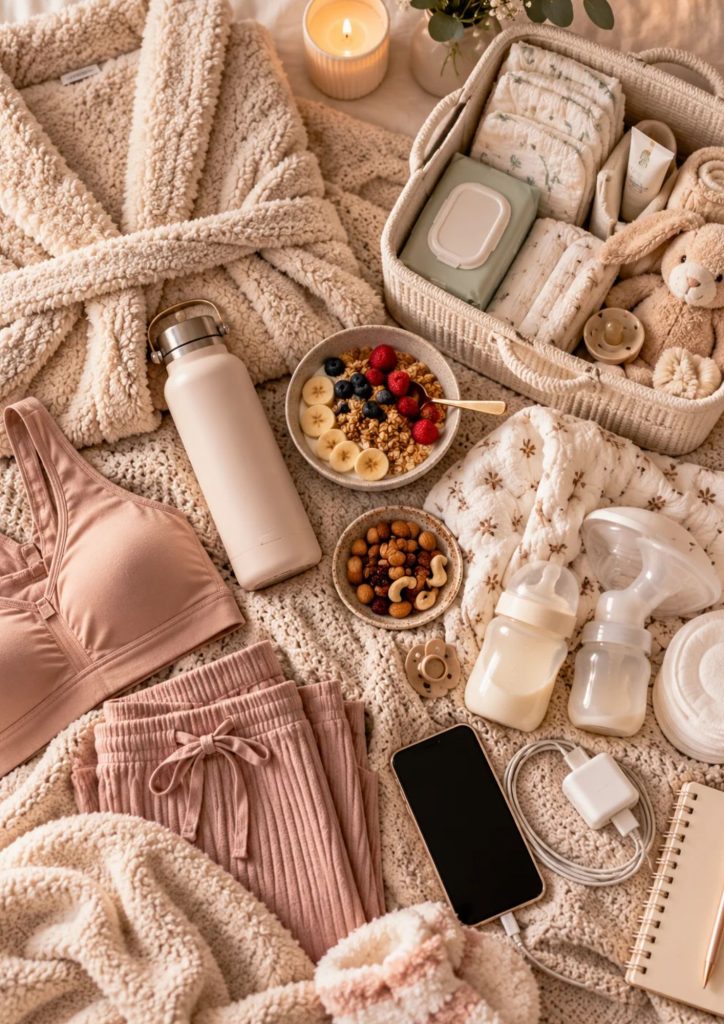
Keep baby supplies close to where you use them
For the baby supplies themselves, start with our newborn must haves checklist so your own comfort kit does not turn into another oversized shopping list.
A small changing caddy
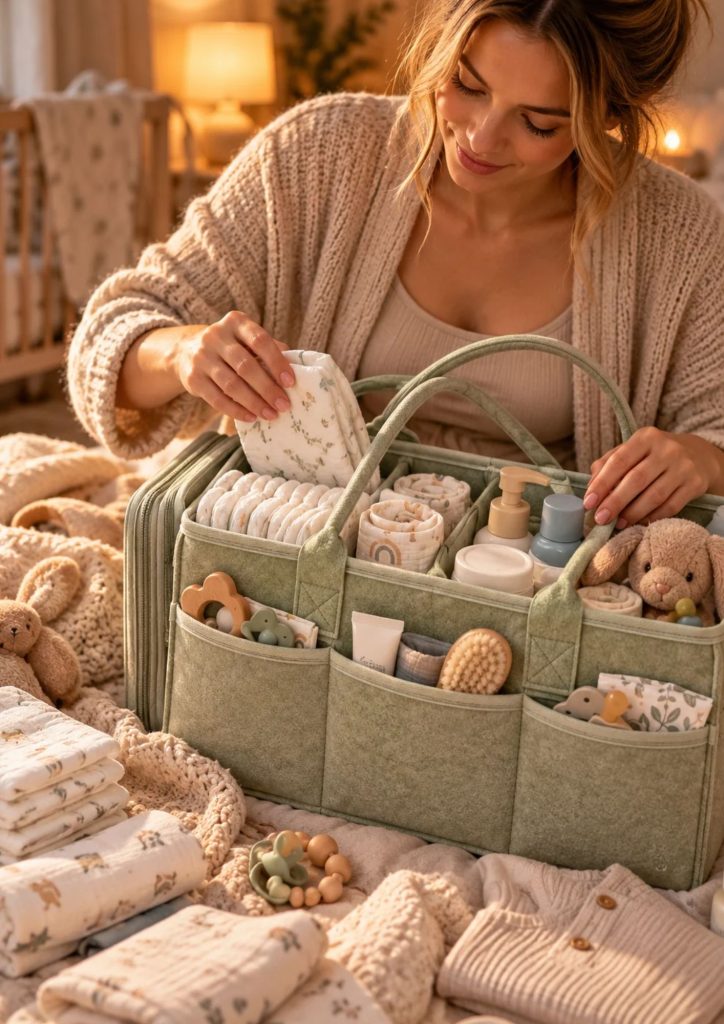
A Parker Baby diaper caddy can hold the next few diapers, wipes, and a spare outfit. Use it to reduce repeated trips between rooms. It should not become a second overflowing changing station.
Burp cloths in several useful places
Put a few aden + anais burp cloths where feeds usually happen and one in your outing bag. This is a simple way to avoid searching for clean fabric with a baby in your arms.
A wet bag for used clothes
A Bumkins wet bag can separate damp or soiled clothes from the rest of your bag during an outing. Empty and wash it afterward rather than leaving used clothing sealed inside for days.
Make the first outings simpler
A bag with a predictable layout
The Skip Hop Forma diaper backpack is a possible choice, but familiar pockets in a bag you already own may work as well. Give diapers, feeding items, and spare clothes fixed places so someone else can find them too.
A carrier if you want one
The Ergobaby Embrace baby carrier is an example for early babywearing. Check the allowed size range and fitting instructions and try it with the adult who will wear it. A carrier is useful only when the fit works for both of you.
Three things you do not need to buy
Our guide with practical advice for new moms covers asking for support and setting boundaries when everyone wants to offer suggestions.
You do not need a productivity system for every feed, an entirely new wardrobe, or a device for every minor task. A short shared note can list what has been packed, what needs washing, and which errands can be handled by someone else.
Ask visitors for specific help. “Please bring dinner on Thursday” is easier to act on than “let me know if you can help.” The same applies at home: another adult can refill supplies, wash parts, or prepare an outing bag without taking over feeding decisions.
How to choose your first purchases
Buy the items you expect to use this week. Leave the rest in a saved list. Feeding accessories depend on your plans and support needs, while many organizational extras are optional.
A practical first-time mom essentials list gives you fewer small obstacles during an ordinary day. It should still leave space for your preferences, your baby, and help from other people.
Prepare one useful spot before buying more
Choose the chair or sofa where you expect to spend time. Put water, a clean burp cloth and your phone within reach without leaving cords near the baby. Keep this setup easy for another caregiver to refill.
For an outing, pack the same few pockets each time. A spare outfit, diaper changing supplies and the feeding items you actually use matter more than a bag with dozens of accessories. You can start with a bag you already own.
Frequently asked questions
What should a first time mom buy for herself
Prioritize comfortable everyday clothes, water within reach and a small setup for the places you feed or hold the baby. Add products for specific inconveniences rather than buying a large bundle.
Do all new moms need nursing pads and a nursing bra
No. These are relevant only when they suit your feeding plan and preferences. Check fit and care instructions and choose a comfortable alternative if you are not nursing.
Do I need a special diaper backpack
No. A bag you already own may work if it fits your supplies and is easy to organize. Choose a new bag only when its layout solves a real problem.
What is useful help when I already have baby gear
Ask for something specific, such as a ready to heat meal, a grocery run or help with laundry. Agree on a time and task so the offer is easy to use.
How do I avoid overbuying before the baby arrives
Set up one solution for feeding, changing, dressing and outings. Keep receipts and add extras when your actual routine shows what is missing.