Toddler Road Trip Snacks: 25 Mess-Free Ideas for Snack Stops
In this article
The best toddler road trip snacks are familiar, low-crumb foods you can serve at a planned stop. Pack them in small portions, keep a wipe-up kit within reach and save new or tricky foods for home. Children under four are still learning to chew and swallow safely, so the way you serve a snack matters as much as what you pack.
This guide is for children roughly one to three years old. It gives you a short list of snack ideas, a simple stop routine and a packing system that keeps food separate from toys and spare clothes.
Disclosure: As an Amazon Associate I earn from qualifying purchases. I may receive a commission when you buy through the paid links in this article, at no extra cost to you.
Plan snack stops, not snacking on the move
Safety guidance for young children is clear on one point: toddlers should sit upright and be watched while they eat. HealthLinkBC's choking-prevention advice lists riding in a car among the situations where small children should not eat. In a rear-facing seat you usually cannot see your child's face, and a driver cannot react quickly.
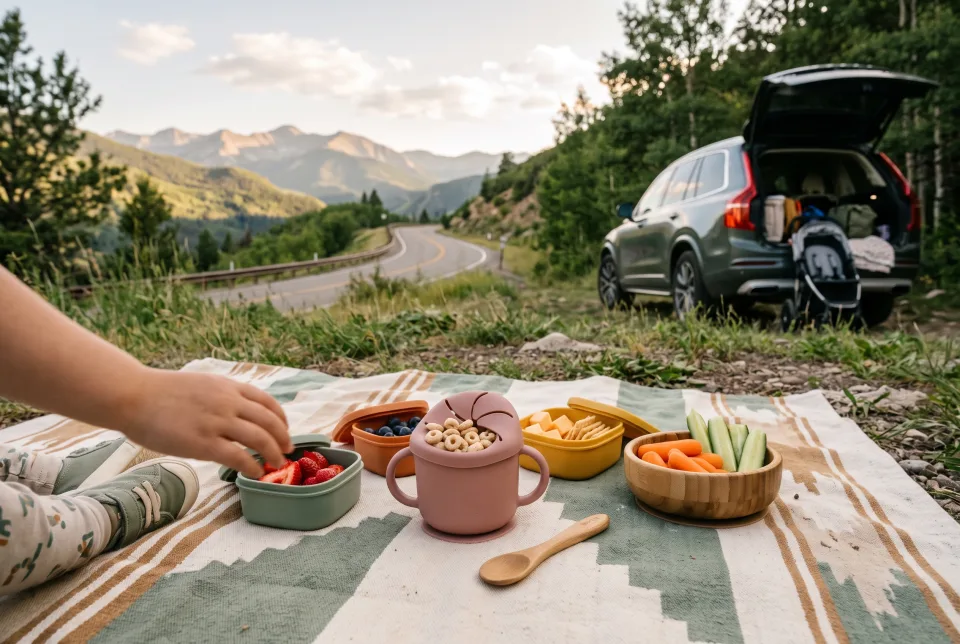
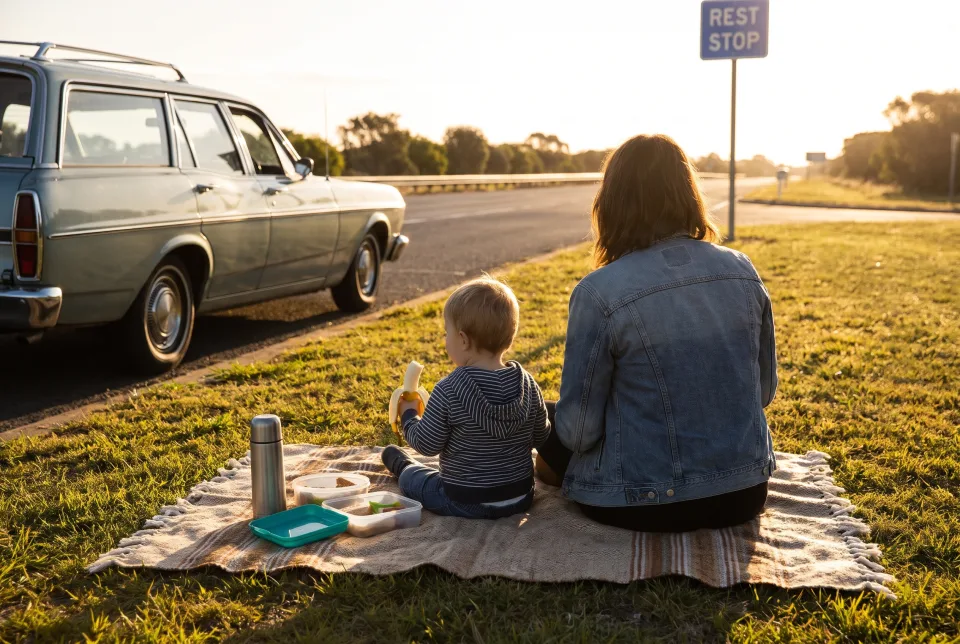
That is why this list is built around snack stops. Every two hours or so, pull over somewhere safe, unbuckle, stretch, change a diaper if needed and then offer food while your toddler sits and you watch. Many families find the drive itself gets calmer when snacks have a clear place in the day.
If you have an older passenger sitting right beside a forward-facing child, you may decide differently for a simple drink. That is your call. Food that needs real chewing still belongs at a stop.
25 toddler road trip snack ideas
Choose four or five from this list, ideally foods your child already eats at home. Cut, peel or soften them as you normally would for your child's age.
Soft and easy
- Banana, peeled at the stop
- Soft pear or ripe peach slices in a lidded container
- Steamed apple slices (raw apple chunks are a choking risk under four)
- Blueberries, squashed or halved for younger toddlers
- Grapes cut lengthwise into quarters
- Avocado on a cracker or soft bread
- Applesauce or fruit puree pouches, squeezed onto a spoon
- Plain yogurt in a small container with a cool pack
Bready and filling
- Mini pancakes or waffle pieces
- Soft whole-grain bread with a thin layer of nut or seed butter
- Pita triangles with hummus
- Rice cakes for toddlers that dissolve easily
- Mini muffins (homemade with less sugar if you like)
- Oat bars without whole nuts or large seeds
- Small pasta shapes, cooked soft and served cold
Protein and dairy
- Cheese cut in thin strips rather than cubes
- Hard-boiled egg, chopped
- Shredded chicken in small pieces
- Bean or lentil patties, cut small
- Tofu cubes, soft
Crunchy (for confident eaters)
- Puffs designed for toddlers
- Thin crackers that soften quickly
- Cucumber in thin sticks, peeled
- Cooked carrot sticks
- Breakfast cereal without nuts, served in a cup
Leave these foods at home
For children under four, choking-prevention guidance recommends avoiding or modifying whole grapes, nuts, seeds, popcorn, hot dog rounds, chunks of raw vegetables or apple, chunks of meat or cheese, raisins, hard or sticky candy and chewing gum. Large spoonfuls of peanut butter are also risky; a thin layer on bread is the usual alternative.
Also skip anything that melts into a sticky mess, foods that need a knife at the stop and anything new. A long drive is not the moment to test a new food or a possible allergen.
Pack a snack box that makes stops quick
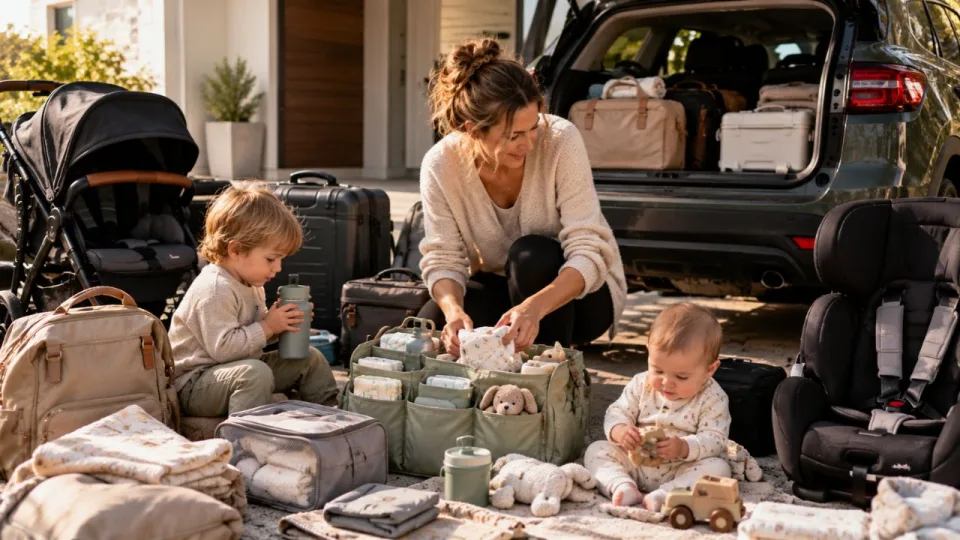
Use one bag or box only for food. Keeping snacks away from toys and spare clothes means you are not digging for a cup while your toddler waits.
- Portion containers: A set of small leak-resistant food containers lets you pack one portion per stop. Label lids with the stop number if that helps you.
- Snack cup: A Munchkin Snack Catcher or similar soft-lid cup reduces spills at the stop for dry snacks like puffs or cereal.
- Cool pack: A small insulated lunch bag with an ice pack keeps yogurt, cheese and cut fruit cool for the first part of the day.
- Clean-up kit: Wipes, a small towel, a spare bib and a zippered wet bag for sticky clothes.
- Drinks: Your child's usual cup with water. Milk can go in the cool bag.
Before you leave, put the first stop's snack at the top. The rest can stay packed until you need them.
A simple stop routine
- Park safely and unbuckle.
- Diaper or potty first, then a few minutes of walking or stretching.
- Hands wiped, child sitting down, adult watching.
- One portion of food plus water.
- Quick wipe, bag closed, back into the car seat with the harness checked.
Ten to twenty minutes is typical. Stopping before your toddler is very hungry usually makes the stop easier.
What if your toddler gets carsick?
The American Academy of Pediatrics suggests a light snack before a trip if your child hasn't eaten in about three hours, frequent stops and having children look outside rather than at books. Keep meals before and during the drive light, and talk to your pediatrician if car sickness is a regular problem.
Want a ready-made plan for the whole drive? The Road Trip Ready Kids shop has printable road trip activity packs and checklists you can print once and reuse on every drive.
For the rest of the gear, use our baby and toddler road trip packing list and the guide to your first road trip with a baby and toddler.
Sources
- HealthLinkBC: Preventing Choking in Small Children
- AAP / HealthyChildren.org: Car Sickness
- NHTSA: Car Seats and Booster Seats
Frequently asked questions
Can my toddler eat in the car seat?
Choking-prevention guidance for children under four recommends not eating while riding in a car. Planned snack stops let your child sit upright while you watch.
How many snacks should I pack?
Plan one small portion per stop plus one spare portion. If the drive takes longer than expected, the spare covers a delay.
Are puree pouches okay for road trips?
They travel well. Squeezing onto a spoon at the stop keeps your toddler practicing spoon feeding and makes it easier to see how much was eaten.
This article is for general information and does not replace advice from your doctor or midwife.